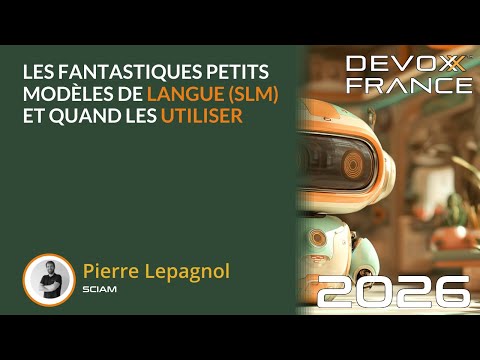
The Fantastic Small Language Models (SLMs) and When to Use Them
summary
This talk explains small language models (SLMs), why teams use them for cheaper, faster, and more controllable AI, and how to employ them in retrieval-augmented generation (RAG) or agent-based systems either alone or alongside larger LLMs. It reviews architectures and techniques that make SLMs perform well, and details the limits and trade-offs to consider when integrating SLMs into AI workflows and agentic systems.
AI-written summary · about
chapters (11)
- 0:00Introduction to SLMs
- 3:12SLM definition and features
- 9:01SLM use cases and benefits
- 10:06LLM vs SLM
- 13:38Moving to SLM
- 16:30Selecting first SLM
- 21:26SLM usage: prompting, RAG, fine-tuning
- 27:22Fine-tuning with LoRA and QLoRA
- 30:55SLM deployment and optimization
- 38:43SLM costs and performance
- 39:27SLM best practices
related talks
 36mProduction-Ready AI Agents: From LLMs to Small Language Models
 40mSurviving the Agentic Hype with Small Language Models
 19mHow I Learned to Stop Worrying and Love the AI — Integrating LLMs into a DMS
 51mTowards a Pragmatic Understanding of Large Language Models
 49mA Practical Approach to Using LLMs: Peculiarities and Pitfalls
 27mThe Cutting Edge of AI: From LLMs to Multimodal Intelligence
 16mExploring the world of Small Language Models
 36mLLMs and AI agents demystified