Value Networks in Open Banking

summary
Presents a practical technique that maps relationships and currency flows using Clayton Christensen’s value network idea plus the Value Engineers’ value exchange mapping and Osterwalder’s canvas to deconstruct and reassemble Open Banking business models. Identifies patterns—manufacturer-supplier pattern, aggregator business model, retailer model—with concrete examples: Twilio, Plaid (acquired for $5.3B), TransferWise, Starling marketplace, Yolt, Intellimortgage. Argues that defining business model and ecosystem predicts who wins, and offers a MuleSoft API as a product workshop to apply it.
AI-written summary · about
chapters (22)
- 0:00Intro
- 1:38Api Ecosystem
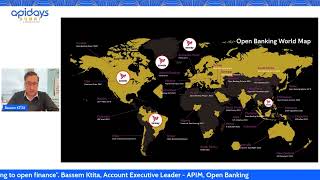
- 3:38Open Banking
- 5:13Business Models
- 6:31Api Business Models
- 7:36Monetization First
- 8:34Business Model Canvas
- 9:11Value Networks
- 10:31Value Exchange
- 11:04Value Engineers
- 11:37Value Exchange Example
- 13:24Digital Enablers
- 14:38Manufacturer Supplier Pattern
- 16:14Third Party Providers
- 17:18Manufacturer Suppliers
- 17:42Api Retailers
- 19:25Aggregators
- 20:12Transferwise
- 20:56Intelli Mortgage
- 22:46Resources
- 22:56Workshops
- 23:19Question
related talks
 24mBusiness Model Innovation via open APIs
 19mAlliances & competing in the new era of open platform banking
 26mBeyond Open Banking - Open Innovation & Open Business
 37mIntroduction to essential elements of Open Banking Framework
 25mOpen Banking is a "How" and Embedded Finance is a "Why"
 25mAPI Business Value beyond Monetization
 31mOpen Banking – The Brand , the Challenges and the Future
 13mFrom Open Banking to Open Economy: What You Need to Know