Digital Transformation in Banking
summary
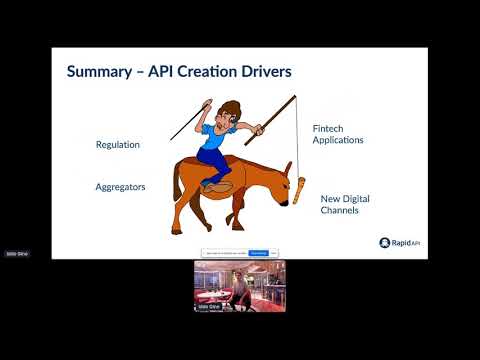
RapidAPI runs a public marketplace with 1M developers and billions of daily calls and projects the API economy near $2.2T; banks typically already have 300+ internal APIs to organize. Adoption accelerates from three forces: fintech frontends that rely on bank partners, regulation like PSD2/open banking, and aggregators (Plaid-style). Practical steps: catalog and expose internal APIs first, deploy a centralized API platform, prioritize developer experience, enable fast CI/CD publishing, and expose new services (KYC, document delivery) as APIs.
AI-written summary · about
chapters (13)
- 0:00Introduction
- 1:24Rapid API overview
- 3:51APIs in financial services
- 8:05Drivers for API adoption
- 10:50Fintech and API partnerships
- 13:19Regulations accelerating APIs
- 16:11API platform best practices
- 18:57Internal APIs first
- 20:42Expanding API products
- 22:06API proliferation summary
- 23:34Q&A: Banks vs fintechs
- 25:59Q&A: Adoption gaps
- 26:40Q&A: Top API communities
related talks
 21mThe future of financial institutions
 49mAPIs as a driver of digital transformation
 26mHow API Technology is Revolutionizing Financial Services
 23mAboard the Beagle: New species in the banking ecosystems
 14mAPI Strategy: Powering Digital Transformation
 32mTransformation w. FinTech collaboration & open banking
 31mOpen Banking – The Brand , the Challenges and the Future
 21mAPI Design in FinTech: Challenges and Opportunities for next-gen APIs.