Meta-antenna: Mechanically Frequency Reconfigurable Metamaterial Antennas

summary
A design and fabrication pipeline creates mechanically reconfigurable metamaterial antennas that shift resonance across 500 MHz to 6.3 GHz (≥10 dB) by compression, bending, or rotation, simulated in an Ansys editor and measured with a LiteVNA. Fabrication uses laser‑cut rubber, spray‑painted silver‑copper conductors and SMA probing; measured simulation error averages 0.873 GHz, acrylic coating shifts ≤33 MHz (<1%), and structures remain functional after 10,000 compression cycles. A headphone demo toggles modes with a 0.12 GHz headphone toggle.
AI-written summary · about
chapters (11)
- 0:00Introduction to meta-antenna
- 1:51Mechanical metamaterials approach
- 3:15Sensing principle explained
- 5:01Design editor workflow
- 6:29Fabrication process
- 7:12Smart headphone demo
- 7:35Language learning tangible
- 7:55Dynamic furniture demo
- 8:18Technical evaluations
- 10:25Summary and conclusion
- 10:48Q&A session
related talks
 13mPushing the Physical Limits of IoT Devices with Programmable Metasurfaces
 15mAcoustic Sensing and Communication Using Metasurface
 16mNR-Surface: NextG-ready µW-reconfigurable mmWave Metasurface
 12mWhy Virtual Antenna™ is preferred by embedded developers
 13mLeakyScatter: A Frequency-Agile Directional Backscatter Network Above 100 GHz
 10mMetaSense: Integrating Sensing Capabilities into Mechanical Metamaterial
 17mIntegrated antennas design for IoT devices
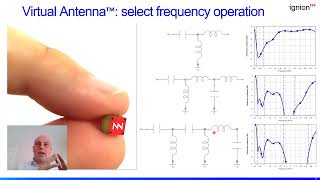 53mExpand the connectivity of your LoRa Generic Node sensor with Virtual Antenna™