Privacy-preserving Data Sharing

summary
An overview that gives concrete failures and workable tools: shows real reidentification examples (Netflix, Strava, Massachusetts health data), demonstrates that k-anonymity fails and that simple pseudonymization is dangerous, explains the formal guarantee of differential privacy and the Laplace mechanism, surveys synthetic-data approaches and Census use, and notes composition and utility tradeoffs. Useful if wanting concrete attacks, which defenses were built, what actually protects aggregates versus individual records, and where gaps remain.
AI-written summary · about
chapters (9)
- 0:00Privacy-preserving data sharing
- 1:13Why privacy matters
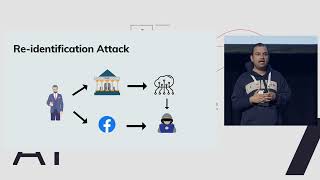
- 6:36Flaws of pseudonymization
- 17:23K-anonymity limits
- 21:43Syntactic guarantees fail
- 24:16Differential privacy solution
- 27:54Data synthesis for privacy
- 30:26Pseudonymization not enough
- 31:31Q&A
related talks
 29mPrivacy-preserving methods: Building secure projects
 05mDe-identification in practice: professionals as end users
 01h 12mModelling Privacy Threats of Medical Data and Health Data Spaces
 39mData Privacy Engineering to power Responsible Enterprise AI
 32mYou've got trust issues, we've got solutions: Differential Privacy
 41mMatching Uses and Data Protections for Government Data
 43mPanel: Privacy Design Patterns for AI Systems: Threats and Protections
 50mPrivacy in Practice with Smart Pseudonymization: Lessons from the Belgian Public Sector