Privacy is not Binary: A discussion of data systems, ethics, and human rights

summary
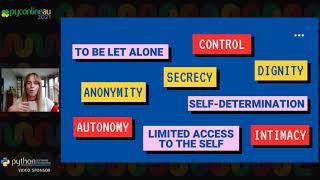
Argues that privacy is not binary and legal definitions like personal information in the Australian Privacy Act and the new Queensland Human Rights Act don’t tell you whether to reuse data; gives concrete examples: Twitter’s simple public/private model, social media text that defeats anonymisation, a 2.5 million–record government dataset disclosure, and community cultural maps with mixed access controls. Recommends ethics-review risk assessment, governance not just tech, and asks: who does this belong to and how do they want it shared
AI-written summary · about
chapters (16)
- 0:00Intro
- 2:45Terminology
- 9:41Privacy in Australia
- 12:59Privacy is a Human Right
- 15:37Private or Public
- 15:49Data in Context
- 18:42Social Media Data
- 23:05Is Social Media Data Public
- 28:00Ethics Approval
- 29:16Privacy is a cultural concept
- 29:56Cultural maps
- 32:30Is this public
- 33:14How do we do better
- 35:07A matter of discussion
- 36:43A closed question
- 37:21Questions
related talks
 51mPrivacy, a relic of the past?
 47mDesigning for User-Centered Privacy
 30mLet’s get radical: digital privacy as a collective issue
 42mDigital Rights / Digital Wrongs: Tech Policy and Human Rights in Australia
 20mData Sharing in Modern Australia
 11mThe Future of Privacy
 16mIs it Possible to Share and Protect Sensitive Information?
 29mAnti-Privacy Anti-Patterns