Privacy, a relic of the past?

summary
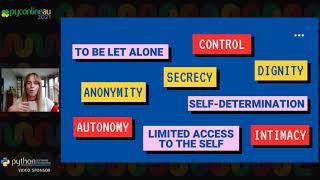
Argues that privacy is a basic human right necessary for checks and balances and shows concrete abuses: wartime census maps later used to deport people, automated mass collection (a 1.9 million dataset in Utah) that fails to surface unknown terror plots, facial recognition and behavior monitoring at Schiphol, intrusive body scanners and biometric banking, and social scoring experiments like China social credit score; cites cases where surveillance backfires (a Montreal system used against a journalist) and urges switching to tools like Signal and Tor.
AI-written summary · about
chapters (6)
- 0:00Start
- 14:11BANNED MIND CONTROL TECHNIQUES UNLEASHED
- 34:21China wants to give all of its citizens a score - and their rating could affect every area of their lives
- 35:25Who's looking into your data?
- 36:10Who's listening in on your conversations?
- 38:53What values do we uphold as a society?
related talks
 30mLet’s get radical: digital privacy as a collective issue
 21mA Frank Conversation on Privacy
 47mDesigning for User-Centered Privacy
 02mHighlights - A Frank Conversation on Privacy
 01h 02mWeaponizing Technology: Examining the Importance of Privacy...
 01h 03mPanel: The security paradox. Individual privacy vs digital driftnets
 45mPrivacy is not Binary: A discussion of data systems, ethics, and human rights
 01h 21mPrivate Life. A Fundamental Right!