Dynamic Manipulation of Player Performance with Music Tempo in Tetris

summary
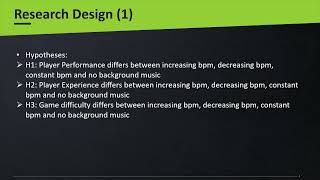
Researchers build Sonotris and DynaTris in Unity with Wwise and run experiments showing music tempo can push player performance up or down. They test with 44 players, >230 Tetris games then validate with 19 players, 50 games, measuring lines per time and a derived acceleration metric. A switch from a staircase to gradual tempo hinders when tempo is synchronous and helps when asynchronous. Dynamic triggering of tempo changes reliably produces hindering or helping effects, though physiological cause remains unexplained.
AI-written summary · about
chapters (7)
- 0:00Start
- 1:24assess the effects of tempo
- 2:40synchronize the music with the gameplay of tetris
- 3:07collected data from 44 cadets from the french military academy
- 3:53analyzed the performance of the players by considering the number of completed lines
- 6:31maintain a constant level of challenge
- 8:45consider the acceleration differentials in the different phases of the game
related talks
 03mFaster, Harder? Investigating the Impact of Changing Background Music Speed on Gameplay...
 07mLike It or Not: Exploring the Impact of (Dis)liked Background Music on Player Behavior and Experi...
 41mA Deep Look Inside Games: GameSDK and Unity Adaptive Performance
 20mInterference: Adapting Player-Music Interaction in Games
 06mUnderstanding Player Patterns by Combining Knowledge-Based Data Abstraction with Interactive ...
 03mThe Ludic Potentials of Player Data
 24mMusic Design and Implementation
 52mPPT – Psychological Performance Tuning