The information architecture of tasks
summary
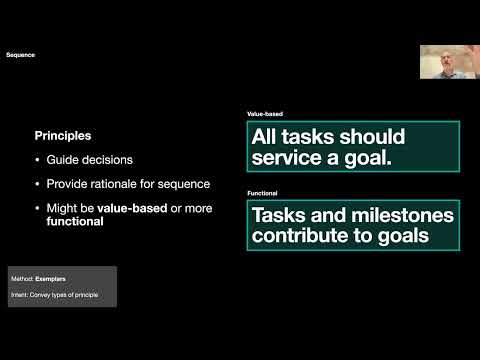
Claims that roughly 40% of to‑do items never get done and that task failure comes from missing system, not motivation. Proposes an IA blueprint: define clear goals, milestones, tasks with attributes (priority, depth, breadth), classify and sequence work, plot milestones on a calendar (Tetris metaphor), then schedule task blocks and negotiate interruptions (office hours example). Recommends designing the workflow first and then mapping it into tools like Asana, Jira, Trello, Notion or even spreadsheets so the software supports the system rather than dictating it.
AI-written summary · about
chapters (18)
- 0:00Introduction by host
- 0:53Speaker introduction
- 1:57Why focus on task systems
- 3:23Making IA practical
- 4:25Understanding the environment
- 5:47Defining key concepts
- 7:10Clarifying goals and tasks
- 8:37Visualizing with metaphors
- 9:40Designing a task system
- 11:02Role of classification
- 12:45Classifying tasks
- 13:46Sequencing tasks
- 15:29Structural planning
- 16:51Planning method
- 17:53Communicating the system
- 19:15Building your own system
- 20:17Information architecture as blueprint
- 20:59Closing and Q&A
related talks
 27mTheory to action: Architecting and implementing your team operating system
 47mThe Teams Are Agile and the Backlog Is Well Refined
 29mTools of Intentional Architectures
 30mTaming the Chaos: Beyond the Quick Wins
 45mArchitecture: The Stuff That's Hard to Change
 30mHow to Visualize Impacts to Your Workflow & Metrics
 40mAdaptive Socio-Technical Systems with Architecture for Flow
 27mThe Superpower of Intentional Architecture