Designing for edge-cases in Baldur's Gate 3

summary
Larian explains concrete fixes: gameplay scripting uses its own OIS/NUBIS language and editor, implements two guards + pass trigger at checkpoints so someone always stops or treats a sneaked-in player, provides two fallback NPCs plus an on-stage cutscene for Will’s quest book and a narrator fallback for the 13 rescued hostages, accepts a disarm exploit by rewriting companion lines so a legendary sword works in Act I, recovers lost nether stones with map markers, small “booster” encounters and save-game patching tools that rewrite flags after release.
AI-written summary · about
chapters (13)
- 0:00Introduction and background
- 0:47Role of a gameplay scriptor
- 2:28Defining and handling edge cases
- 6:04Why edge cases matter
- 7:45Common edge case scenarios
- 11:28Checkpoint scripting example
- 15:38NPC quest line example
- 17:45Systemic narrative solution
- 23:02Supporting unexpected mechanics
- 25:47Save game patching techniques
- 30:17Compromise in complex systems
- 34:27Lost essential item solutions
- 40:26Questions and answers
related talks
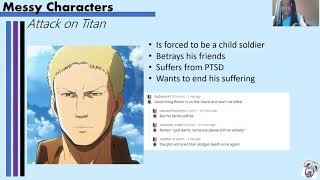 49mMessy characters and breadcrumb trails: Designing player investment
 01h 04mFireside Chat
 59mGame AI 4N00bz
 59mOut on a Limb: Practical Approaches to Branching Story
 45mTips and Tricks on Developing an Open World Game
 37mRomance Design in Video Games
 46mWriting for Games - A Backstory
 45mExploring the Gameplay Ability System (GAS) with an Action RPG