4 Ways IoT Devices Are Creating Privacy Implications For Organizations

summary
Four concrete failure modes: devices sending unencrypted PHI or video across flat networks (a hospital device leaks patient names, MRNs and images; an IP camera streams 20 GB to cloud), credentials traveling in cleartext or using default credentials (Telnet/FTP, hard-coded passwords, 150k cloud-camera accounts harvested), shipped misconfigurations and remote‑access backdoors (TeamViewer on Raspberry Pis), and emerging always-on sensors in smart cities that record location, biometrics and audio that get centralized and reassembled.
AI-written summary · about
chapters (8)
- 0:00Introduction and setup
- 1:29IoT security challenges overview
- 10:21Privacy risks from unencrypted data
- 20:07Unencrypted credentials and breaches
- 27:40Default misconfigurations in IoT
- 32:00Innovation and privacy implications
- 40:47Recommendations and next steps
- 44:36Q&A on responsibility and healthcare
related talks
 19mSecurity and Privacy in a Hyper-connected World
 40mSecurity/Privacy in the IoT generation
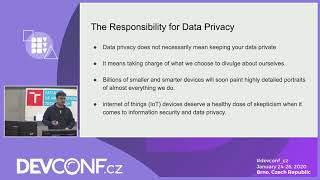 26mPrivacy in the Age of IoT
 14mEthics and the Internet of Things
 40mInto the Mind of an IoT Hacker | How to Protect IoT Networks & Devices
 01h 03mPolicy implications of the internet of things
 13mThe dark side of IoT
 29mSecuring IoT/OT Against Modern Threats