Social Networks and Protest Participation: Evidence from 130 Million Twitter Users
summary
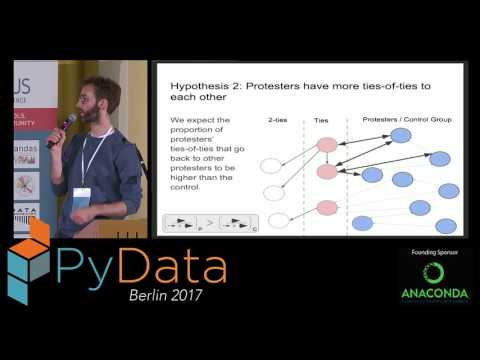
Claims that network position predicts protest attendance using 130 million Twitter users as the crawl and Python tooling plus the Twitter REST API to build a two‑degree follower graph. The workflow identifies 764 users who tweeted from Place de la République, expands to ~120 million nodes, removes verified hubs, and computes direct, indirect, triadic and reciprocated tie counts. Results show protesters have significantly more in‑group ties and topic modeling on follower lists supports robustness — the analyses consistently hold.
AI-written summary · about
chapters (28)
- 0:00Introduction
- 0:26Research context
- 1:09Charlie Hebdo protest
- 2:57Past study limitations
- 3:40Social media data opportunities
- 4:47Desired dataset
- 5:27Data collection method
- 6:54Twitter network structure
- 8:17Protest motivation theory
- 9:01Exposure in Twitter networks
- 10:02Network structure hypotheses
- 12:12Network differences analysis
- 13:54Robustness checks
- 14:37Protester identity validation
- 15:40Control user interest
- 16:23Temporal network ties
- 17:04Negative hashtags handling
- 17:27Topic modeling follower networks
- 19:14User clustering by accounts
- 19:36Study conclusions
- 20:18Future research
- 21:09Q&A: Topic modeling
- 21:51Q&A: Improving topic modeling
- 22:19Q&A: Paid vs organic protests
- 23:01Q&A: API limitations
- 23:49Q&A: API changes
- 24:52Q&A: Analysis approach
- 25:37Closing remarks
related talks
 30mAnalyzing COVID-19 Protest Movements: A Multidimensional Approach Using Geo-Social Media Data
 41mDemystifying Social Network Analysis (SNA)
 41mCity attractiveness seen through Twitter
 38mAnalysing Russian Troll Tweets data with Python
 37mLarge Scale Social Network Data Collection & Analysis...
 31mReal time association mining in large social networks
 03mHow Twitter followers propagate information
 01h 33mBuilding an Interactive Network Graph to Understand Communities