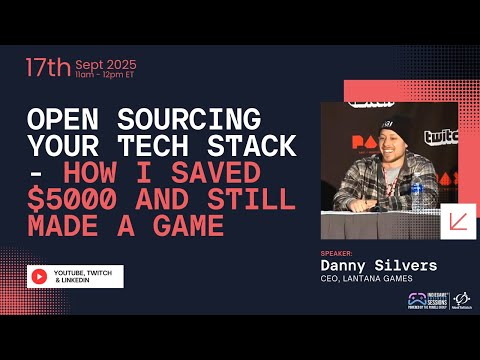
Open Sourcing Your Tech Stack - How I Saved $5000 and Still Made a Game
summary
Claims a practical switch to FOSS tools that save ~$5,000 for a small indie team by replacing subscriptions with LibreOffice, GIMP/Krita, Inkscape, Blender, Audacity/Tenacity, and Godot, with concrete examples of format compatibility, export targets (PC, mobile, web, console via exporters), and a 4.5 Godot feature list (stencil/materials, SMAA, shader baker). Covers community tradeoffs — no vendor support but active GitHub/Discord help — and actionable steps to support projects on GitHub and optimize for Steam Deck.
AI-written summary · about
chapters (21)
- 0:00Open sourcing your tech stack
- 1:08What is open source
- 3:38Open source licenses
- 11:29Proprietary software costs
- 12:56Benefits of free and open source software
- 17:35Open source beyond coders
- 19:40FOSS productivity suites
- 21:27Open source art and design software options
- 23:123D modeling tools
- 25:392D animation & music tools
- 28:16FOSS writing tools
- 31:11Open source game engines
- 35:36FOSS IDEs and tools
- 36:39Open source video conferencing and operating systems
- 38:48Linux and Steam Deck
- 40:31Cost savings and team benefits
- 44:28Open source in games & government
- 45:53How to join open source
- 48:04Open source FAQ
- 50:12Final thoughts
- 51:16Q&A
related talks
 18mNot like everyone else: a survival recipe for an indie game
 14mBuilding an Open Source Strategy Before Building Your Product
 27mDesign Your Open Source Project
 51mNo, Open Source Didn't Destroy My Creative Agency
 51mThe Art, the Advocacy and the FLOSS
 32mOpen Source: The Engine of Innovation in the Digital Age
 34mBringing non-technical people to the Free/Libre/Open world and why it matters
 41mHow Your Company Can Help Sustain Open Source