Participatory Co-Design, Grounded Methodology ... Post-Inclusion

summary
Argues for “post‑inclusion”: mainstream tech and art built with disabled people, not retrofitted, using a three‑phase grounded method (open coding, accessibility exploration, evaluated product). Demonstrates two projects: a breakdance project that makes tactile Play‑Doh prototypes and caps over mainstream beat pads to teach mobility and choreography, with sighted dancers learning from visually impaired participants and a public performance in Derby; and a Bath river arts program that co‑commissions installations, sound flags and a water‑tank performance with care homes and engineers, and reports positive, actionable feedback.
AI-written summary · about
chapters (19)
- 0:00Intro
- 2:37PRESENTATION OUTLINE
- 5:40DISABILITY AS A MEDICAL ISSUE
- 6:41DISABILITY AND TASK ASSISTANCE
- 13:29THREE ELEMENTS OF PARTICIPATORY ENGAGEMENT
- 15:50DEVELOPING PARTICIPATORY ENGAGEMENT - CONSIDERATIONS
- 17:21WHERE TO ENGAGE
- 18:17VIRTUAL ENGAGEMENT
- 19:44PHYSICAL ENGAGEMENT
- 21:28METHOD OF RESEARCH AND DESIGN: PARTICIPATORY METHOD / GROUNDED METHODOLOGY
- 24:48METHOD OF OUTCOME/EVALUATION: INCLUSIVE CAPITAL
- 26:45SOUND PAD – INCLUSIVE TECHNOLOGY, VISUAL IMPAIRMENT AND BREAK DANCING
- 27:47MOBILITY ISSUES & VISUAL IMPAIRMENT
- 29:54METHODS OF PRACTICE: RATIONALE METHOD
- 30:38PROJECT OBJECTIVES
- 32:20OPEN CODING PHASE
- 41:30OUTLINE OF THE PROJECT
- 44:25SELECTIVE CODING PHASE
- 47:27SUMMARY
related talks
 49mExclusive Design
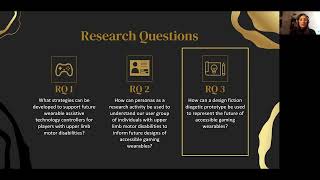 07mFrom Imagination to Innovation: Using Participatory Design Fiction to Envision the Future of Acce...
 14mParticipatory Design through a Learning Science Lens
 43mBuilding a Design Culture for Inclusivity
 36mExclusive Design
 51mInclusive Methods for Co-Design Between Blind and Sighted...
 21mAmplifying Quiet Voices: Challenges and Opportunities for Participatory Design at an Urban Scale
 19mDisabled by Design; Designed by Choice