How OpenChain Became The International Standard for Compliance
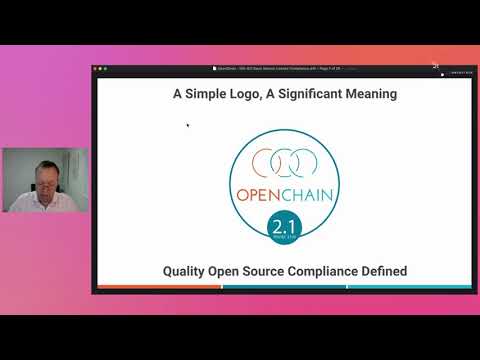
summary
OpenChain becomes the formal international standard as ISO 5230 / OpenChain 2.1, converted via the Joint Development Foundation after an April 2020 submission and December 2020 graduation. It defines clear inflection points for inbound, internal and outbound open source process management, offers a free self-certification questionnaire and CC0 reference materials on GitHub, and scales across hundreds of companies (platinum members include Arm, Qualcomm, Google, Microsoft, Toyota and Cisco). Tooling workgroups (~160 firms), ~4,000 mailing-list members, and third‑party certifiers like PwC support adoption.
AI-written summary · about
chapters (29)
- 0:00Introduction
- 3:00What is OpenChain
- 3:41Define inflection points
- 4:30Goal of OpenChain
- 5:25OpenChain went to market
- 6:31What does ISO 5230 mean
- 7:12Diversity of members
- 8:38Companies adopting OpenChain
- 9:12Hitachi
- 9:47Community
- 10:35Standard
- 11:50Case Studies
- 12:07Github
- 13:19How to get support
- 13:58Partner program
- 14:25Service providers
- 14:47Interoperability
- 16:03ThirdParty Certification
- 16:37Self Certification
- 18:54Independent Assessment
- 19:40Certification
- 20:18The Big Point
- 21:24OpenChain Project
- 21:59Join our community
- 22:40Questions
- 23:29The history of the commercial ecosystem
- 27:12The selfcertification process
- 28:32The supply chain
- 29:59Corporate negativity
related talks
 17mUnderstanding How OpenChain ISO/IEC 5230 and ISO/IEC 18974 Support InnerSource
 29mTrusted Supply Chains - How OpenChain Makes a Difference in a...
 31mOpenChain’s Strategic Direction for 2027 in Global Practices
 42mOpen Source Compliance Management - Removing the Thorn from...
 32mExpanding the OpenChain Standards Portfolio - More Sister Standards?
 40mA Practical Guide to Using International Standards for Open Source Procurement
 36mUsing OpenChain for IP Management
 16mOpen Source Consumption/ Adoption Manifesto