Collaborative Leadership: Governance Beyond Company Affiliation
summary
Projects controlled by neutral foundations have lower risk for users and vendors because boards, trademark ownership, and CLAs determine neutrality; check for board diversity, foundation-owned trademarks and a foundation CLA or DCO. Contributing when a project has real traction (users, vendor interest) and transferring assets like repos and trademarks works but requires long-term staff commitment. Examples: Kubernetes thriving after donation to CNCF and companies contributing Harbor and Contour; governance artifacts to adopt include security.md and the Contributor Covenant.
AI-written summary · about
chapters (10)
- 0:00Intro
- 2:51Leadership trademarks, and projects
- 5:39Higher risk single company in control
- 6:46Give up control for increased collaboration
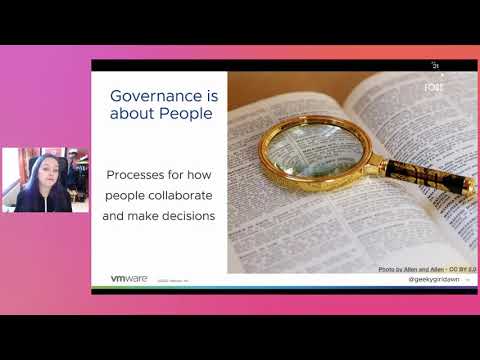
- 9:13Processes for how people collaborate and make decisions
- 11:07Licensing, code of conduct, contribution, and communication process
- 13:49Process for reporting and responding to security issues
- 15:13Opportunity and responsibility
- 17:14Code of conduct leadership and community
- 20:42Setting expectations reduces uncertainty and makes people feel welcome
related talks
 25mCollaborative Leadership: Governance Beyond Company Affiliation
 23mGood Governance Practices for Healthy Open Source Projects
 22mHow can open source foundations support my project?
 46mThe Role of Foundations in Today's Open Source
 15mSo You Want to Start an Open Source Software Foundation?
 32mPanel Discussion: Contribute with Clarity: Choosing Your...
 45mAvoiding Maslow’s Hammer: Or the Problem of the Birmingham Screwdriver in Open So...
 33mPanel: Startups With Open Source Projects: Can They Be Successful in the CNCF? And Should They Be?