Learning Data Science through Education, Bootcamps & MOOC
summary
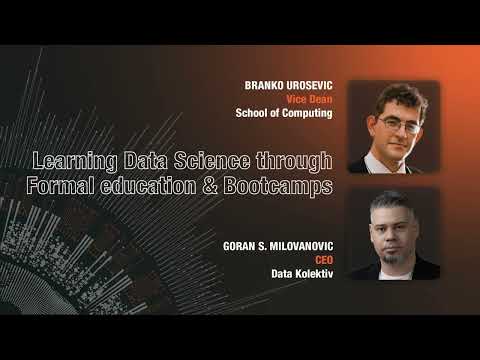
A new Master of Computational Finance combines finance, computer science, machine learning and blockchain and accepts a Python and R bootcamp prep before two semesters of statistics, financial data analysis and machine learning; program enrollment hits 48 enrolled first cohort. Companies still run on legacy spreadsheets so only about 25% of advanced banks’ decisions are data driven, creating demand for students who can bridge theory and production. Teaching uses diverse 3–5 person groups to scale mentorship (40 students → ~10 groups) and emphasizes probability, causality and practical model optimization under time constraints.
AI-written summary · about
chapters (11)
- 0:00Introduction
- 5:48Data science in finance programs
- 8:36Data science education challenges
- 12:03Formal vs informal education
- 17:28Academic value in data science
- 23:02Formal education drawbacks
- 27:46Informal education benefits
- 34:03Scaling with group learning
- 37:39Domain expertise importance
- 42:15Real-world project challenges
- 45:43Recommendations & closing
related talks
 24mHow to successfully become a Data Scientist
 02mBuilding data science capacity in your org
 43mAddressing the Scarcity of Data Scientist
 25mHow Data Science is Evolving Technology Education
 42mI'm Starting in DataScience – Where to Begin?
 48mGlobal Data Science Masters and Career Opportunities in USA, Canada and Europe
 50mLearning Machine Learning
 38mGetting ready for a career in Analytics and Data Science