Automating On-Call Duties with Ansible Tower

summary
Red Hat IT automates on-call remediation using Ansible Tower + Nagios event handler to run repair playbooks, set five minutes of downtime so Nagios doesn’t re-alert, post a Jive blog entry, and open ServiceNow tickets when alerts recur. Infrastructure includes clustered Postgres for Tower with a DR playbook cutover. Outcome: over 100 pager playbooks automated, 15% of production alerts handled without paging, 50 converted to a generic restart template, and the open-sourced handler script is available.
AI-written summary · about
chapters (24)
- 0:00Introduction
- 0:26How I started with Ansible
- 1:54Ansible Tower infrastructure setup
- 3:24Automation steps
- 5:20Examples
- 6:23Blog Post Example
- 6:56Configuration Infrastructure Management
- 7:56Nagios
- 9:15Nagios Workflow
- 13:57Nagios Event Handler
- 16:10Simplified Code
- 16:42Splunk
- 18:14Ansible Tower
- 18:50Success
- 21:02OnCall Team
- 22:09OnCall Duties
- 23:51Nagios Users
- 24:46Why 5 Minutes
- 26:10Service Owners
- 28:13Puppet Nagios
- 29:03ANCA
- 29:43Hosting Issues
- 30:14False Positives
- 31:00I was working with them
related talks
 48mAutomated patch management with Ansible and Rundeck
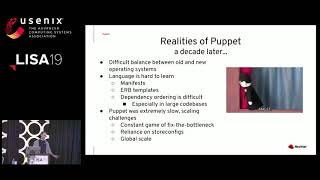 36mPulling the Puppet Strings with Ansible
 35mAuto-healing with Ansible
 27mYou Should Be On Call, too
 39mContinuous Deployment with Ansible
 16mHuman Centered On Call Practices
 36mMake You Ops-Life Easy – ansible usecases you didn´t out of track
 29mGood Practices and Security for your Ansible Automation Platform 2