Pitfalls and pro-tips for effective and transparent BI tools data science & applications
summary
Practical rules for self‑service BI: track data lineage with Confluence or a GitHub repo so analysts see source fields, favor a layered stack — a data reader (Tableau/MicroStrategy) over a prep layer (Alteryx/RapidMiner) and ETL (SSIS or Python on AWS/GCP/Azure) — and monitor with both the BI tool and external watchdogs. Embrace barely sufficient production answers, focus on one optimization goal at a time, accept recurring maintenance (the Golden Gate gets repainted every seven years) and prioritize keep the lights on reliability.
AI-written summary · about
chapters (6)
- 0:00Start
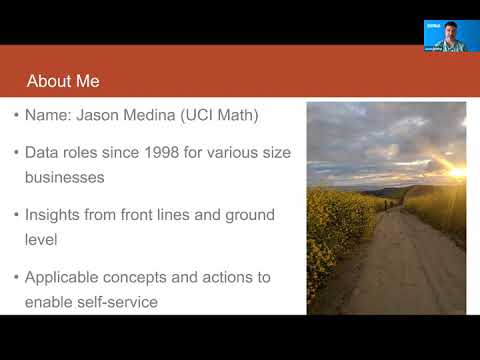
- 1:12About Me
- 3:44Agenda
- 11:00Routine maintenance for flexible persistence
- 15:06Yes but no and it depends (The Rule of 3)
- 25:17Workflow automation lifecycle for self service BI
related talks
 41mCreating an Effective Reporting Strategy: Tools, Metrics, Analytics
 57mWhy BI Projects Fail (And What You Can Do About It)
 20mPower BI Culture: Governance as a gateway to adoption, not a barrier.
 07mDelivering Information in Context
 19mWhat Does It Mean To Be a Data-Driven Organisation?
 52mSelf-Service Business Analytics in 2013
 52mPower BI Model Development Best Practices in a Team
 24mA Practical Approach To Unlock Value From Data and Analytics