How Ranker Turned Pop Culture Lists Into Personalized TV Recommendations

summary
Ranker turns its 1B votes cast into a recommender that tackles cold‑start new TV shows by parsing users into synthetic split users and training multiple submodels on year‑buckets (they find 5–10 year buckets balance cost and benefit). Experiments test up/down‑sampling and per‑bucket models; final pipeline ensembles per‑show scores by taking the max, following a most pleasure strategy. A/B samples of 500 users show statistically significant increases in recommended new shows and the system is deployed.
AI-written summary · about
chapters (17)
- 0:00Introduction and speakers
- 1:27What is Ranker and its data
- 4:16WatchWorthy app overview
- 5:40First-party data challenges
- 8:10Ranker engine and testing
- 10:58User voting behavior issues
- 12:25Metadata-free recommendation problem
- 14:07Related research on fairness
- 15:33Problem with recommending new shows
- 18:07Class imbalance in voting data
- 19:13Introducing bridge voters
- 21:41Upsampling and downsampling trials
- 24:10Split sampling approach
- 27:19Methodology and ensemble models
- 28:23Split sampling results example
- 30:55Future directions and opportunities
- 33:02Q&A session
related talks
 24mImproving YouTube Recommender systems for big screen users
 27mEnhancing Personalization Using Recommendation Systems & Multi-Armed Bandits
 58mRecommender Systems – A Walkthrough
 55mLearning to Rank, a Little
 24mOffline Ranking Validation - Predicting A/B Test Results
 37mFood is personal! Design and impact of personalized recommendations in e-grocery
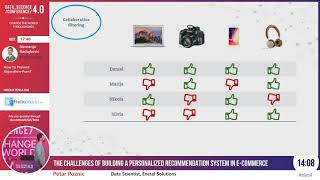 29mThe Challenges of Building a Personalized Recommendation System in E-Commerce
 24mLearning "Learning to Rank"