Building microservices with Vert.x
summary
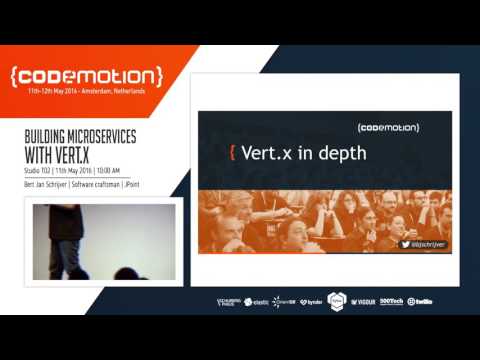
Company builds microservices as small Vert.x modules used by 10 teams over 3 years, running on Java 8, Vert.x, MongoDB, AngularJS and AWS with Nginx, Jenkins and Nexus. Demos show an echo service and an event bus bridge to browsers over SockJS/websockets, plus clustering across JVMs; it works in production. Callback chains get replaced with RXJava observables. CI deploy tooling (Jenkins agents + Nexus) enables zero‑downtime per‑service deploys. Pain points: blocking the event loop, JVM overhead per module, and a rocky Vert.x 2→3 upgrade (about half the projects migrated).
AI-written summary · about
chapters (11)
- 0:00Introduction and speaker background
- 4:57Hello World with Vert.x
- 10:39Vert.x architecture and event loop
- 18:13Polyglot and event-driven nature
- 18:34Event bus demo and communication
- 23:30Callback hell and RX Java solution
- 31:38Browser integration with event bus
- 36:58Vert.x for microservices
- 39:24Deployment and DevOps with Vert.x
- 42:35Summary and further reading
- 43:38Q&A session
related talks
 59mBuilding reactive microservices with Vert.x 3.3
 01h 01mReactive Microservices on the JVM with Vert.x
 34mDeveloping Asynchronous Polyglot Applications with vert.x
 46mVert.x 3 goes Scala
 01h 01mExploring Vert.x in Java, Groovy, and JavaScript
 51mWriting Highly Concurrent Polyglot Applications with Vert.x
 47mModern app programming with RxJava and Eclipse Vert.x
 37mVert.x — Can It Replace Spring Cloud?