Reactive Microservices on the JVM with Vert.x

summary
Shows a working Vert.x pipeline: Bluetooth sensors -> Intel Edison/Raspberry Pi -> Wi‑Fi -> Vert.x -> browser, handling 3,400 readings in ~10 minutes and demonstrating a separate deployment that processes 7 million transactions in a day using Raspberry Pis + Apache Spark. Compares runtimes: a 6 MB Vert.x fat jar that starts fast and stays responsive under load versus larger thread‑pool JVM apps (Spring Boot, WildFly). Demonstrates the clustered event bus (Java/Groovy/Ruby/JS), real‑time leaderboard, and integration with traditional JVM services.
AI-written summary · about
chapters (17)
- 0:00Intro
- 6:20How far can you take it
- 10:18Red Hat Developers
- 16:52Spring Boot
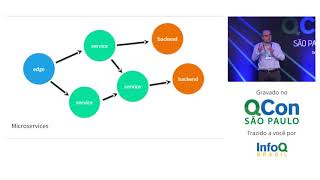
- 23:30Microservices
- 28:12Read these books
- 29:28The old Java world
- 31:52Key characteristics
- 33:32Read the book
- 35:12Key patterns
- 38:44Circuit breakers
- 39:32Vertx
- 42:50Async
- 44:08Multicore
- 45:17Simple Main Method
- 46:32Router
- 47:05Demo
related talks
 51mWriting Highly Concurrent Polyglot Applications with Vert.x
 45mBuilding microservices with Vert.x
 47mModern app programming with RxJava and Eclipse Vert.x
 34mDeveloping Asynchronous Polyglot Applications with vert.x
 52mReactive Systems with Eclipse Vert.x and Kubernetes
 46mVert.x 3 goes Scala
 01h 01mExploring Vert.x in Java, Groovy, and JavaScript
 59mBuilding reactive microservices with Vert.x 3.3