Responding to a Cyber Attack with Missiles

summary
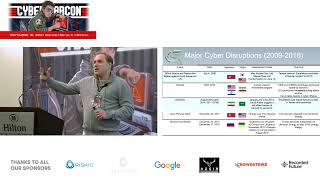
Governments publicly reserve the right to reply to cyber attacks with kinetic force, but attribution remains the core obstacle: cheap, deniable cyber weapons and false flags make it hard to know who fired the shot. Historical specifics: Stuxnet sabotages Iranian centrifuges and marks a before/after, an Israeli missile strike hits a Gaza building tied to cyber operations, North Korea steals from banks and crypto (fun fact: ~84 helicopters reported), and societies run roughly 50% of daily lives through networked systems — cyber tools rust and lack deterrence.
AI-written summary · about
chapters (10)
- 0:00Introduction and Context
- 8:59Future Domains of Warfare
- 12:18The Artificial Intelligence Race
- 17:03Nation State Cyber Actors
- 22:39Stuxnet and Nuclear Facilities
- 25:48Kinetic Response to Cyber
- 29:00Cyber Weapon Deterrence
- 34:26Societal Impacts of Cyber War
- 38:48Conclusion and Thank You
- 41:06Q&A Session
related talks
 01h 00mNew Challenges in Cyber Security
 10mCCyberattacks: Is the Juice Worth the Squeeze?
 16mA Short Course in Cyber Security
 58mThe Next Arms Race
 46mNational Cyber-Aggression and Private-Sector Internet Infrastructure
 29mCyber War in Perspective: Analysis From the Crisis in Ukraine
 55mA Short Course in Cyber Warfare
 09mDisrupting Cyber Adversaries: Meta's Approach to Deterrence