FoveAR: Combining an Optically See-Through Near-Eye Display with Projector-Based ...
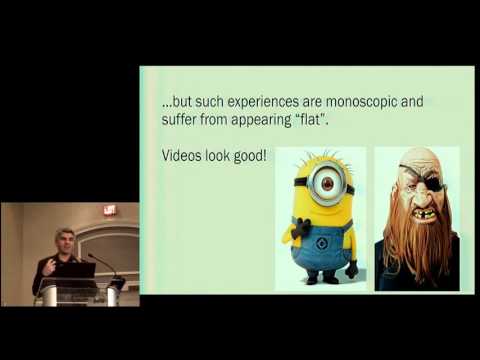
summary
Combines an optically see-through headset Loomis BK-32 with ceiling-tracked projector and Kinect v2 depth sensing to extend AR to >100° field of view. Implements four prototype experiences (helicopter, Rube Goldberg, telepresence, shooting), uses five rendering passes and projector warping, and blends periphery projection with a stereoscopic inset. Single-projector prototype yields about 120° horizontal, calibration and tracking noise remain, but pilot users report stable peripheral imagery and no increase in simulator sickness.
AI-written summary · about
chapters (11)
- 0:00Start
- 1:02Commercially Available AR HMDs
- 2:28Why is Wide FOV Hard for OST HMD?
- 3:31Attempts at Wide AR FOV
- 5:19Related Hybrid Displays
- 7:26Complimentary Modalities
- 10:34Occlusion Shadow
- 11:03Surface Shading
- 11:55Rendering: 5 Passes
- 12:32Design Space Considerations
- 13:48Limitations
related talks
 16mAugmenting the Field-of-View of Head-Mounted Displays with Sparse Peripheral Displays
 39mBig AR Talk: Three Innovators Discuss Unlocking AR's Potential
 16mInteractive 360-Degree Glasses-Free Tabletop 3D Display
 17mAugmenting Augmented Reality with Non-Line-of-Sight Perception
 09mHMD Light: Sharing In-VR Experience via Head-Mounted Projector for Asymmetric Interaction
 23mParallel Eyes: Exploring Human Capability and Behaviors with Paralleled First Person View Sharing
 25mThe Missing Link in VR/AR
 08mAR for Flight Control at AWE 2015