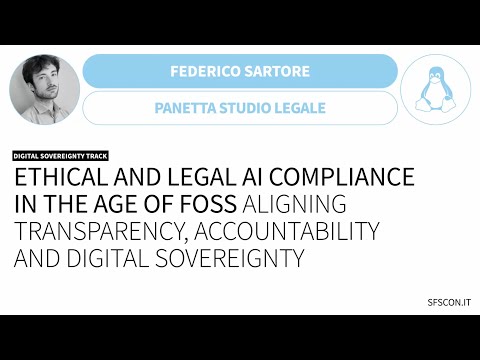
Ethical and Legal AI Compliance in the Age of FOSS
summary
EU law treats GDPR and the AI Act as complementary but different regimes: GDPR governs personal data while the AI Act (approved 2024, full applicability August 26, 2026) uses a risk based approach with open source exemption for models released under free licenses unless they create a systemic/high-risk exception. Compliance requires tight legal‑technical cooperation, reproducible documentation, human oversight and audits; open source eases model evaluation and peer review, while interplay with the Cyber Resilience Act and upcoming revisions remains unresolved.
AI-written summary · about
chapters (9)
- 0:00Introduction to AI compliance
- 1:07GDPR and AI Act overview
- 3:17Risk-based AI Act obligations
- 5:04Transparency in AI and FOSS
- 7:33AI Act implementation challenges
- 9:00FOSS exemptions in AI Act
- 10:28EU regulation revisions ahead
- 11:52AI ethics vs legal compliance
- 13:19Q&A on AI Act interactions
related talks
 39mFrom Policy Enthusiast to Legislators' Contact Point
 26mThe European AI Act: Challenges and Opportunities
 48mPanel: Why Open Source AI Matters for Europe
 18mOpen Source in EU Policy
 01h 11mThe Intersection of AI and Regulation How Organisations and Regulators Should...
 22mEthical Algorithms, Licensing Impasses: The Intersection of Free Software and AI openness
 08mWhy AI Governance Matters More Than Ever
 50mAI Development and Copyright: Public ≠ Free Use