"Yes, you CAN look at the whole ocean!"
summary
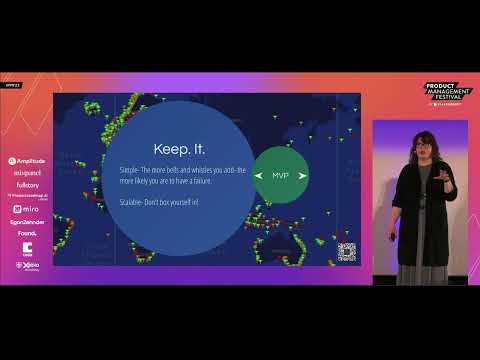
Port-call style launch ops replaces vague checklists with a reproducible system: quick-response cards, a common operating picture and cascading tickets that auto-notify downstream teams when a date slips. Built on Jira/Salesforce (brief experiment with Honeycode), it scales—used to coordinate 1,866 launches in one year—enforces accountability, and survives turnover because each role’s checklist is swappable. The concrete claims: automate red/green flags, work launch date backwards, keep the workflow minimal, and the system still runs three years after deployment.
AI-written summary · about
chapters (10)
- 0:00Introduction and background
- 1:07Nautical analogies and product launches
- 3:57Rules change closer to launch
- 5:42Guide rails for launches
- 8:34Checklists and automation tools
- 13:51Scaling the process
- 17:06Realistic launch constraints
- 20:35Avoiding scope creep
- 22:41Working backwards from launch date
- 24:48Q&A session
related talks
 38mA Game of Testing
 46mScrum & Lean Startup in Action: Design to Delivery in 6 Months
 33mPaving the Road to Effective Software Development
 44mImprove your Flow of Value
 30mTaming the Chaos: Beyond the Quick Wins
 27mTheory to action: Architecting and implementing your team operating system
 22mDecomposition and beyond: frontend engineering at scale
 44mPaving the Road to Effective Software Development