Unleash Your Team's Potential Through The 4 Stages Of Psychological Safety

summary
Claims that psychological safety strongly correlates with team performance, citing Google 2016 study (180 teams) and Timothy Clark’s progression from inclusion to challenging; says there is no quick fix and safety is context dependent and slow to build. Recommends starting with self leadership: vulnerability, emotion regulation, journaling and coaching. Concrete systems used successfully are culture handbook, pulse surveys and anonymous Slido AMAs, plus the Game Outcome Project survey, direct feedback routines and consistent leader behavior to create predictable, safer team norms.
AI-written summary · about
chapters (7)
- 0:00Psychological safety intro
- 4:45Why safety feels complex
- 8:37Vulnerability builds safety
- 12:08Self-leadership foundation
- 14:37Culture of feedback
- 18:50Adapting tools to team
- 20:36Key takeaways
related talks
 36mPsychological Safety: Building fearless teams
 22mPsychological safety: How to become a team that learns
 15mInfusing Psychological Safety into Your Teams
 09m“Taking the lead – Building psychological safety at work!”
 34mDiverse Leaders in Tech - Psychological Safety: Building Trust, Accountability, and Inclusion
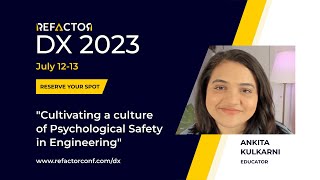 28mCultivating a culture of Psychological Safety in Engineering
 27mFostering psychological safety in distributed teams
 01h 01mPsychological Safety and Mental Health in Times of Crisis