Sniffing Out the Strange — A Look at Anomaly Detection
summary
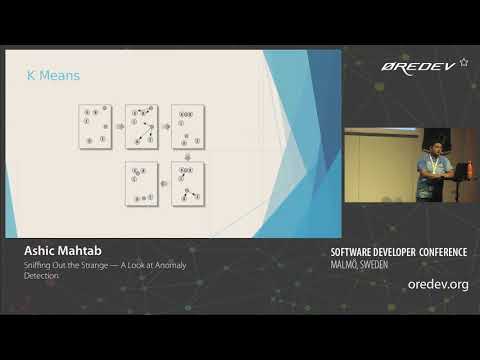
Concrete comparison of algorithms and an actual FX fraud pipeline decide watching: K-means vs BFR vs CURE with implementations touching Spark and streaming K‑means, distance tricks like Mahalanobis distance and Jaccard/one‑hot/Edit measures, and BFR summaries (n, sum, sum‑squares) to avoid holding all points. The project surfaces a clear outcome—mini clusters + retained set feeding a streaming detector, fraud traced to shared phone numbers across postcodes, and a fallback simple query yielding >90% success.
AI-written summary · about
chapters (6)
- 0:00Start
- 7:04Agglomerative Clustering
- 12:32Distance measures in Non-Euclidean Spaces
- 17:26Enter BFR (Bradley, Fayyad, and Reina)
- 25:41Mahalanobis Distance
- 28:41CURE
related talks
 40mFraud detection without labeled data
 44mAnomaly Detection in Telecom with Spark
 52mDevil in the Haystack
 52mModern Fraud Prevention Using Deep Learning
 30mMassive Scale Anomaly Detection Framework
 24mHunting Criminals with Hybrid Analytics
 42mDetecting novel anomalies in Twitter
 13mBuilding Financial Fortresses: Real-Time Fraud Detection