What You Need to Know About Open Source—Trust Me, I’m a Lawyer

summary
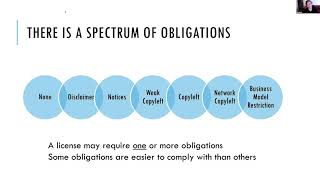
Defines open source by five concrete criteria (free redistribution, source availability, derivative rights, non-interference, non-discrimination), compares MIT/BSD/Apache2/GPL families, explains Apache 2 patent grant and patent non-assert poison pill, and shows how GPL copyleft and Affero close the SaaS loophole. Covers CLAs vs assignment, the React patent spat, tooling like Black Duck, and recommends simple governance: an approved-licenses whitelist and a thumbs-up / thumbs-down policy to avoid accidental legal exposure.
AI-written summary · about
chapters (12)
- 0:00Introduction and importance
- 4:09Defining open source
- 6:46Rights and restrictions
- 12:37Non-interference and compliance
- 15:30Intellectual property basics
- 17:22Commercializing open source
- 20:13Legal enforcement and risk
- 23:29Overview of common licenses
- 31:24Patent clauses and Apache 2
- 38:05Copyleft and GPL licenses
- 46:50Contribution and due diligence
- 54:24Risk mitigation and strategy
related talks
 48mWhat You Need to Know About Open Source - Trust Me, I'm a Lawyer
 01h 11mWhat You Need to Know About Open Source—Trust Me, I'm a Lawyer
 57mWhat You Need to Know About Open Source—Trust Me, I'm a Lawyer
 51mThe Impact of Leveraging Open Source
 42mOpen Source Licenses: Between Parish Wars and Radicalism
 01h 38mOpen Source Licensing: Types, Strategies and Compliance
 46mIntellectual Property Primer
 37mIntro to Open Source Licensing