Open Source Licenses: Between Parish Wars and Radicalism

summary
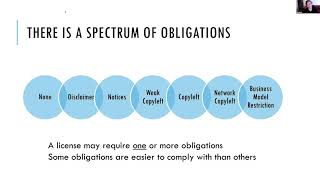
Compares concrete open-source licenses and their practical consequences: Apache 2.0 and MIT as permissive licenses with minimal obligations, versus GPLv3 as a strong copyleft that can extend to network use and block App Store distribution. Explains patent risks and LGPL vs GPL linking differences, describes audit practices scanning dependencies with tools like FOSSA and Palamida plus manual pom/xml checks, and mentions the rise of ethical licenses (e.g., Hippocratic) and anti‑996 variants; recommends getting legal advice for compliance.
AI-written summary · about
chapters (18)
- 0:00Open source licenses: between parish wars and radicalism
- 0:12Who are you?
- 1:06This isn't a course on open source
- 1:44She's a really cool friend, but she has a big problem in the room
- 2:36The best open source licenses to use and grids to absolutely avoid
- 3:09Open source isn't a development methodology
- 3:25The criteria for open source
- 5:33BSD licenses
- 6:34Patents
- 8:25Unit tests
- 8:58Free licenses
- 9:09The Free Software Foundation
- 12:57Strong copyleft
- 19:01Ethical meanings
- 19:23Triforce
- 20:13The bread on his initiative
- 20:26Tensions
- 33:36Questions / Answers
related talks
 31mOpen Source Licenses: Turf Wars and Radicalism
 57mWhat You Need to Know About Open Source—Trust Me, I'm a Lawyer
 48mWhat You Need to Know About Open Source - Trust Me, I'm a Lawyer
 01h 38mOpen Source Licensing: Types, Strategies and Compliance
 51mThe Impact of Leveraging Open Source
 01h 04mWhat You Need to Know About Open Source—Trust Me, I’m a Lawyer
 43mSoftware Licensing and Compliance: It's All About Community
 14mOpen Source Licensing in a Business World