Do You Read Me? — Better Communication for Stronger Teams
summary
Concrete, toolable techniques: how to run meetings by asking what problem are we trying to solve, prioritize work with what is our priority, and diagnose culture with what culture are we looking to build. Practical rules include keeping sentences ~15–20 words, prefer active voice, use neutral and open questions, recap with “so you’re saying…” (called actors listening), keep a spreadsheet of team work hours to schedule synchronous time deliberately, and push bad news early.
AI-written summary · about
chapters (16)
- 0:00Start
- 5:07What Does It Mean To Communicate
- 6:28Be Open and Admitting Your Limits
- 7:39Emotional Awareness
- 10:11Listen To Learn and Not To Respond Listening
- 10:39Actors Listening
- 11:17Be More Invested in the Results of a Conversation than in Your Own Contributions
- 12:03Be Culturally Aware
- 13:23Open Questions
- 13:43Follow Up Questions
- 15:00Avoid Surprises
- 16:17What Problem Are We Trying To Solve
- 16:36What Is Our Priority
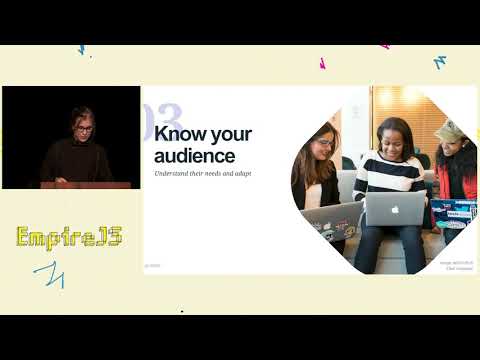
- 17:44Know Your Audience
- 19:20Active Voice
- 19:59Be Direct with Kindness
related talks
 15mI Love Good Meetings
 24mKeep talking and no-one explodes – Tips for smooth teams
 01h 50mReading the Repo: A Workshop on Clear, Effective Communication Techniques
 28mBuilding Culture through Communication
 59mEmpowering Soft Skills with Team Dynamics/Communication Skills
 33mHearing and Being Heard - Getting the Entire Team to Speak
 19mHearing and Being Heard - Getting the Entire Team to Speak
 01h 28mHow to make hybrid meetings work