Biomimicry and Cybersecurity: Borrowing 3 Billion Years of Evolution to Better Protect Ourselves

summary
The talk examines how biological defense and resilience strategies — like adaptive immunity, camouflage, decentralization and coevolution — can inspire cybersecurity solutions. It presents three biomimicry levels (copying forms, mimicking natural processes, and emulating ecosystems) and shows concrete analogies and use cases for designing adaptive, decentralized, ecosystem-like digital defenses rather than rigid perimeters.
AI-written summary · about
chapters (20)
- 0:00Biomimicry and cybersecurity intro
- 1:03Speaker and goals
- 3:57Nature inspires innovation
- 6:29Biomimicry levels
- 8:55Problem-solution bioinspiration
- 9:16Stigmergy and ant coordination
- 11:03Camouflage in cyber
- 12:53LSB image camouflage demo
- 15:22Honeypot and supply chain
- 18:32Client-side firewall
- 21:41Mimosa pudica protection
- 24:08Mimosa cybersecurity
- 25:10Suricates risk management
- 27:12Sentinel adaptation in SOCs
- 31:03Adaptive immunity
- 34:12Genetic algorithms for bots
- 37:25Genetic algorithms for WAF
- 43:47Mycorrhizal networks
- 47:21Biomimetic strategies
- 48:26Conclusion
related talks
 47mBiomimicry and Cybersecurity: Learning from 3 Billion Years…
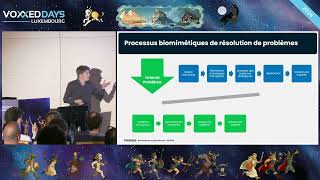 45mBiomimicry and Cybersecurity: Learning from 3 billion years of evolution
 27mAdapting Defense to New Threats
 46mPerforming Like a Cybersecurity Champion
 59mCybersecurity as an ecosystem
 32mLessons Learned Developing an AI Cyber Immune System: The Good, Bad & Ugly
 20mGetting Ahead of Cybercrime
 32mSoftware security as a force of nature