Adapting Defense to New Threats

summary
Strategies for updating cybersecurity defenses against new threats, focusing on how artificial intelligence and other emerging technologies change prevention and neutralization of attacks. Includes real-world case studies and guidance on adapting infrastructure to anticipate and handle future challenges; technologies mentioned include AI and related emerging tech in defensive systems.
AI-written summary · about
chapters (22)
- 0:00Introduction
- 1:04Einstein on security
- 3:12Virus and antivirus history
- 4:59Threat evolution and defense
- 5:41Pandemic impact on tools
- 7:06Global cyberattacks rise
- 7:50AI limitations
- 9:54ChatGPT risks
- 12:24Trust AI or humans
- 13:50Colonial Pipeline case
- 15:37Phishing and security
- 16:22Malware evolution
- 17:03AI in cybersecurity
- 17:24Intrusion detection systems
- 18:29Predictive analysis and blockchain
- 19:36Machine and deep learning
- 21:03Identity and data protection
- 22:08Summary
- 23:38Q&A: Developing countries
- 24:41Q&A: Small business AI
- 25:45Q&A: AI ethics
- 26:32Q&A: Emerging tech
related talks
 01mSecurity in the AI Era: Response and Strategy
 01h 11mNew Technologies in Cybersecurity
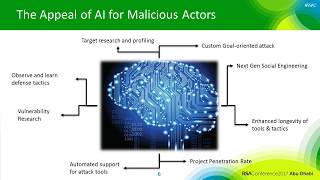 13mQuick Look: AI in Cybersecurity: A Balancing Force or a Disruptor?
 31mCybersecurity in the Age of AI: The Main Challenges
 20mGetting Ahead of Cybercrime
 01h 19mAI vs AI: Cyber Defence and Managed Resilience
 11mAI-Powered Cybersecurity in the Age of Advanced Threats
 20mNew Approaches for Defending IT in Today’s Threat Landscape