Successfully Scaling AI and the Role of Trust

summary
A concrete claim: scaling AI fails when users can’t rely on outputs — a neuroprosthetic user chooses a simple, deterministic arm over a high‑tech one because it just works, showing trust beats novelty. Root causes cited: poor data foundation, models’ uncertainty and non‑explainability, no business impact measurement, missing engineering/ops for deployment, and talent/ways‑of‑working gaps. Remedies: solid data and target architecture, automated pipelines with quality gates, monitoring and adaptation, cross‑functional teams and servant leadership, measured by the VOTE framework and proven by 20 projects in production under trustworthy AI practices.
AI-written summary · about
chapters (4)
related talks
 19mScaling & Industrialization of AI
 24mBuilding High Trust Teams in an AI Enabled Engineering Org
 38mKeynote: The Next Era of AI: Moving from “Can We Build It?” to “Can We Trust It?”
 08mOpening Remarks with Lisa Fernihough
 44mThe Future of Engineering Teams in an AI-Native World
 28mWhy AI Works for Individuals but Fails in Enterprises, and How to Fix It.
 48mPractical Strategies for Successful AI Adoption in your Organisation
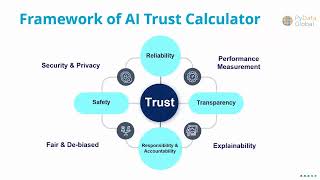 31mMeasurement of Trust in AI