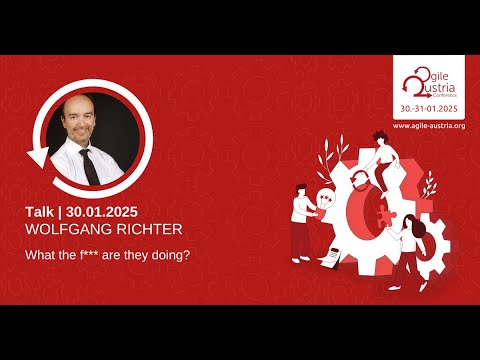
What the f*** they are doing?
summary
Claims that understanding societal versus company culture measurably improves cross‑border projects, backed by Hofstede’s tool and the Big Five personality layer, with concrete tactics: Hofstede’s six dimensions for expectations, explicit goal‑setting to build trust, and incident anecdotes like a program with 45 nationalities that rebuilt a telco system across USA Austria and China. The takeaway is practical: which models are used, what metrics changed, how long alignment takes, and whether the distributed build actually delivered.
AI-written summary · about
chapters (13)
- 0:00International team culture
- 2:14Company culture matters
- 6:46International collaboration goals
- 11:23Hofstede’s cultural dimensions
- 16:21Societal vs company culture
- 23:50Individual personalities in teams
- 26:23Trust in agile teams
- 31:18Balancing cultures
- 37:21Can culture change?
- 38:46Velocity as trust metric
- 39:06Culture vs family analogy
- 42:16Mixing cultural backgrounds
- 45:31Q&A
related talks
 59mHow to Lead a Cross-Cultural Team
 31mBuilding High-Performing Cross-Cultural Teams
 44mBeyond borders - navigating cultural challenges
 54mThe Culture Map
 28mCulture Is Strategy: Leading Tech Teams Across Cultures
 18mBuilding High-Performing Cross-Cultural Teams
 51mTales of a German Building Diverse Teams Across All Time Zones
 31mCulture is Still a Challenge