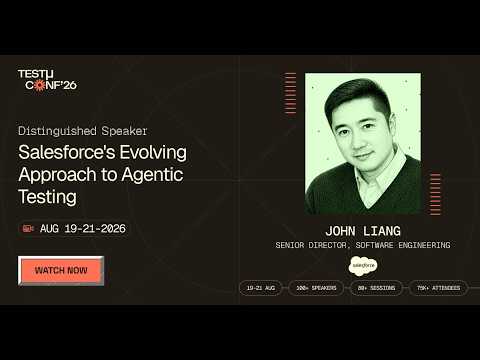
Testing at the Speed of Agents: Salesforce's Evolving Approach to Agentic Testing
summary
Salesforce outlines a phased QA shift: validate intermediate traces (utterances, tool calls, grounding) not just final responses; build industry-specific test environments after Singapore Airlines revealed terminology gaps; run agent-to-agent scenarios using LambdaTest test agent to simulate thousands of concurrent multi-turn voice sessions; measure accuracy, conciseness, completeness, tone, latency and correct human escalation; find surprising failures in knowledge retrieval and voice under noise/accents; bake evaluations into CI/CD and expose results through Agent Force Studio for customer tuning.
AI-written summary · about
chapters (10)
- 0:00How Is Salesforce Testing Agentic AI?
- 3:41Why Is Agentic AI Harder to Test Than Traditional Software?
- 5:13How Do You Evaluate GenAI Accuracy and Response Quality?
- 8:16How Do You Validate AI Agent Actions, Tools, and Outcomes?
- 10:25Why Do AI Agents Fail in Real Customer Environments?
- 13:34How Can AI Agents Test Other AI Agents?
- 16:42Why Multi-Turn Testing Matters for AI Agents
- 18:14How Do You Test Voice Agents for Accents, Noise, and Interruptions?
- 21:51How to Build a Reliable Testing Strategy for Agentic AI
- 25:32What Does the New Quality Loop for AI Agents Look Like?
related talks
 43mTesting Agentic AI Applications: Beyond Traditional QA
 37mAI agents testing How to evaluate the unpredictable
 47mAgentic Testing: Your Skilled Human Tester
 31mIntroducing Agent Testing
 28mTesting at the Speed of Thought: QA in the Era of GenAI apps
 33mTrust but Verify: Testing Agents in Copilot Studio
 22mDiscover the Future of Salesforce Development
 18mReinventing App Testing with Agentic Apps