Simulation of traffic scenarios using SUMO
summary
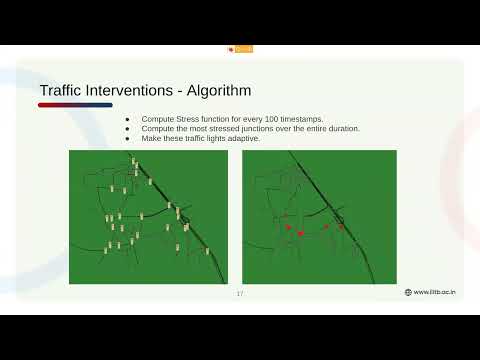
SUMO-based simulations of Bengaluru’s Electronic City run for about one hour across low/moderate/high traffic and implement deadlock detection, emission detection, and speed detector placement. Stress is a linear combo of five weighted parameters (halted vehicles, CO2, occupancy, queue length, waiting time). Making five traffic lights adaptive reduces mean travel time and waiting time most in high traffic; one junction’s pollutants drop from ~24,000 mg to much lower and fall in rank. Code is open-sourced and available via PyPI.
AI-written summary · about
chapters (20)
- 0:00Traffic in India
- 0:47Traffic in E-City
- 1:22Adaptive Traffic Lights
- 1:37Introduction
- 1:56Traffic Scenarios
- 2:07Traffic Properties
- 2:18Stress function
- 3:30Metrics in Action
- 5:01Use Cases
- 6:16Simple Interventions
- 6:34Python Library
- 6:59Traffic Interventions - Algorithm
- 7:55Mean Travel Time
- 8:23Mean Waiting Time
- 8:48Stress vs Time
- 9:32Emission Analysis
- 11:03Speed Camera Placement
- 11:57Real World Data: Yulu bikes
- 12:39Placing Yulu bike stands
- 13:24Future Plans