Investigating the behaviors of cyclists and pedestrians under automated shuttle operation
summary
At a Linköping SHOW pilot site researchers use video, Telraam and a shuttle onboard device to compare trajectory sources and measure effects of automated shuttles on cyclists and pedestrians. Shuttles run very slowly around 2.1 m/s and operate on the central bypass 99.5% of the time; bicycle use of the bypass drops about 20% when shuttles are present and pedestrian bypass use falls from 7% to 5%. Overtaking maneuvers average 8–10 s with ~3 m/s speed difference; no clear pedestrian–bike conflicts are detected.
AI-written summary · about
chapters (9)
- 0:00Start
- 3:15Data collection in the study area
- 5:27Data comparison - pedestrians and bikes
- 6:36Data comparison-Automated shuttles
- 8:44Space usage
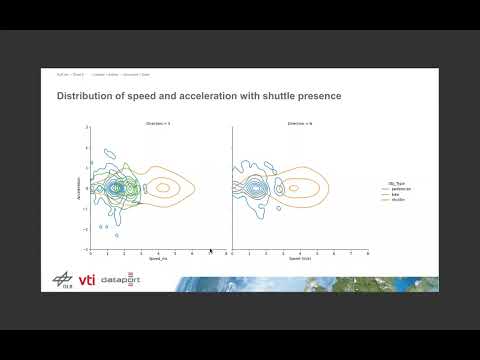
- 12:35Distribution of speed and acceleration with shuttle presence
- 14:36Lateral position - pedestrian
- 15:05Interactions between bikes and shuttles-overtaking maneuver
- 18:30Conclusion and next step