RTX Case Study: The Evolution of Vulnerability Discovery
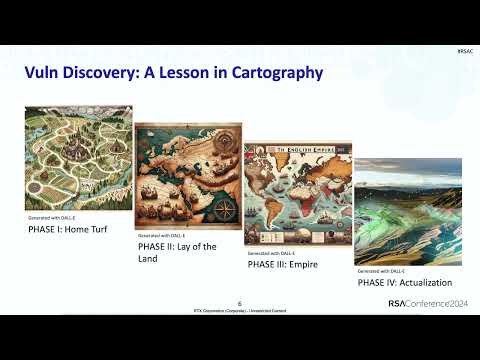
summary
RTX reports securing about 585,000 hosts across 90 countries and identifies roughly 13,000 web entities, of which about two thirds are trivial redirects. The team separates host/service discovery from vulnerability scanning, uses netflow, certificate transparency and DNS as inputs, built a seed-data database after spreadsheets, and operationalizes attack surface management while avoiding non‑FedRAMP tool features (no internal notes pushed). The concrete takeaways: taxonomy, asset database, and assurance domains exist and are already in use.
AI-written summary · about
chapters (6)
- 0:00RTX and vulnerability discovery
- 8:21Phase one: Home turf
- 14:07Phase two: Attack surface management
- 31:19Phase three: Extended enterprise
- 37:03Phase four: Assurance domains
- 46:26Q&A on risk rating
related talks
 58mNothing to Risk but Risk Itself: Expanding Vulnerability Risk with Internet-Scale Data
 43mThe Art of Vulnerability Management - Practical Application of Cyber Triage
 33mFrom Chaos to Calm: Vulnerability Management for a Dynamic, Sprawling Technology Estate
- 43mThe Art of Vulnerability Management - Practical Application of Cyber Triage
 31mFollow the Trace: How Traditional AppSec Tools Have Failed Us
 50mWorrisome Web Vulnerability Trends in the Race to Innovation
 33mUnderstanding the Impact of Critical Vulnerabilities in Critical Infrastructure: A De...
 50mWhy Extended Detection and Response (XDR) Must Unite the Industry