Bringing mental health data to doctors
summary
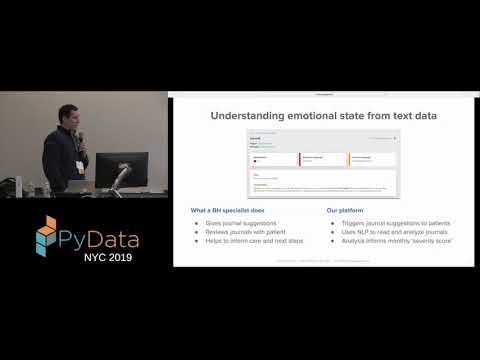
A product team turns questionnaires, Apple Health steps and heart rate, and in-app behavior into a single risk score from questionnaires + Apple Health that stratifies panels so clinicians focus the riskiest patients; claims include faster triage for a field where 1 in 5 adults need care and 67% go untreated. A pipeline combines classical and deep-learning NLP for journals to flag suicidal ideation and cut provider reading time. The system ships as a non‑FDA decision‑support flow so it can iterate quickly.
AI-written summary · about
chapters (17)
- 0:00Mental health data intro
- 1:46Mental health challenges today
- 4:36Normal Flow for providers
- 7:09Patient outcome insights
- 9:19NLP for journal analysis
- 11:32Engagement KPIs balance
- 12:57Data project goals
- 15:49Expectations for data work
- 17:57Iterative data collaboration
- 21:47Data-driven company culture
- 23:54Making data visible
- 25:19Stakeholders and developers
- 26:45Saying no and teaching others
- 29:13Roadmaps and flexibility
- 30:42Data empowerment
- 31:59Patient data collection
- 36:31Handling sensitive data
related talks
 17mTransforming Medical Records Into a Heart Attack Prediction Model
 23mEngineering AI-Powered Predictive Healthcare Systems
 28mAI in healthcare - Deep learning for precision psychiatry
 20mAugmenting Mental Health Care in the Digital Age: Machine Learning as a Therapist Assistant
 07mHow AI is Enabling Healthcare's Biggest Blindspot
 03mDBTB INT Sai Moturu r
 01h 00mKeynote Panel: AI in Healthcare
 59mKeynote Panel AI in Healthcare