Privacy Threat Modeling Analysis of Cloud Services Against Privacy Regulations
summary
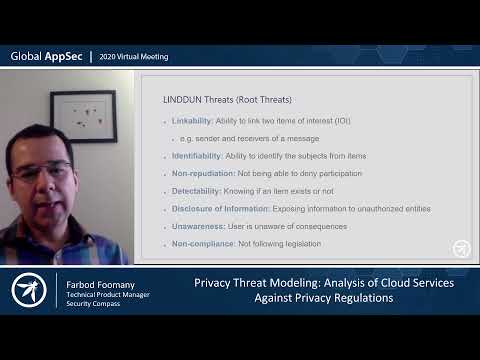
Claims that regulation-driven privacy threat modeling for cloud services produces actionable requirements and LINDDUN and CPTM and Q-TTM methods map to concrete threats, while a built privacy tagging layer converts GDPR articles into user stories and features. Demonstrates parameterization (eg breach notification = 72 hours, access response = 30 vs 15 days) and proposes reusable, pre-populated threat lists with applicability rules for interactions; framework is prototyped on a sample cloud app and reported as repeatable and scalable.
AI-written summary · about
chapters (14)
- 0:00Start
- 0:57Privacy Modeling for Cloud Services Based on the Compliance Regulations
- 2:02What Is Threat Modeling
- 2:25What Does It Mean for Privacy
- 4:16Goal Opportunity Statements
- 5:08Privacy Threat Modeling
- 8:52Identifiability
- 9:12Detectability
- 17:48Pros and Cons of Cptm
- 20:28Data Flow Diagram
- 26:17Examples
- 34:47Lack of Data Protection
- 35:26Parameterizing Threats
- 35:53Parametrize the Threats
related talks
 44mA Taste of Privacy Threat Modeling
 22mPrivacy Threat Modeling
 40mCloud Threat Modeling - from Architecture Design to Application Development
 32mIntro to Threat Modeling in the Cloud
 01h 12mModelling Privacy Threats of Medical Data and Health Data Spaces
 53mPractical Threat Modeling for real-world and Cloud Situations in our hybrid and W...
 45mDiving into the Tenacious Threats of Cloud Data Lakes
 46mThreat modeling is on the rise