Breaking limbs and systems: A black belt story on learning
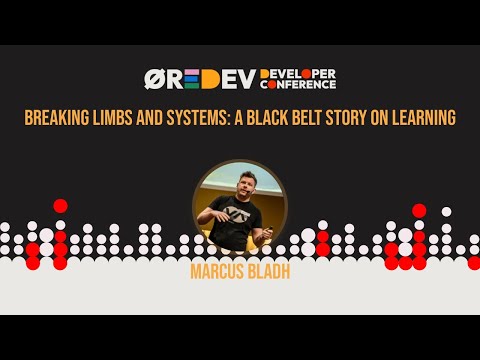
summary
Concrete claims and tools: stepwise chaos experiments using AWS Fault Injection Service plus monitoring and an abort threshold, and iterative troubleshooting assisted by Amazon Q. Examples include CPU stress on an EC2 in an Auto Scaling group that crashes when blast radius is too large, and a remediation path: instance type, autoscaling, or code optimization. Framing is hands on not rhetorical, mapping belts to experience and treating experiments as chaos engineering experiments whose output is specific fixes or validated assumptions.
AI-written summary · about
chapters (19)
- 0:00Introduction
- 1:02Who I am and my background
- 2:28Jiu-jitsu and Dunning-Kruger
- 3:33Learning curves in martial arts and IT
- 5:00Chaos engineering
- 7:07Chaos experiment principles
- 9:56Chaos engineering for all systems
- 11:42Safe production breaks
- 13:29Learning from incidents
- 16:44Organizational failure responsibility
- 17:27Five whys for root causes
- 21:07Experience vs tenure
- 23:56Curiosity and open-mindedness
- 26:47Learning mindset in software
- 29:16Chaos engineering with AWS FIS
- 33:31Key takeaways
- 35:21AI tools for learning
- 38:07Advanced chaos testing
- 40:14Final thoughts
related talks
 23mBreaking Bad (Systems): a journey through chaos engineering
 35mImprove resilience with automated chaos engineering
 57mChaos Engineering Primer
 22mLooking Back to Look Forward
 01h 02mPractical Chaos Engineering breaking things on purpose to make them more resilient against failure
 29mImprove Resilience with automated chaos engineering
 42mChaos Engineering: Why Breaking Things Should be Practiced
 18mChaos Engineering: Break It On Purpose