How the Internet Works

summary
A typed request becomes a DNS UDP query on port 53, wrapped in UDP then IP then an Ethernet frame, resolved by ARP, NATed at the home router, and routed across ISPs using BGP whose global table is about ~600,000 routes; resolution climbs the DNS hierarchy starting from 13 root servers to gTLD servers to an authoritative NS, returning an A record (216.58.192.36), then a TCP three-way handshake to port 443, a TLS handshake, and an HTTP GET — all engineered pieces actually exchanged and usually working.
AI-written summary · about
chapters (38)
- 0:00Start
- 1:35DNS Header
- 2:27DNS Question
- 2:50DNS Message
- 4:24IP and UDP
- 5:33IP Header
- 7:33IP Packet
- 8:05Local Network
- 10:38Segments
- 11:56Ethernet Frame
- 14:24ARP Packet
- 15:55Local Router
- 16:08Route Table
- 17:16NAT
- 19:17Next Hops
- 20:13Routing Protocol
- 21:50Autonomous Systems
- 22:38IANA
- 23:05BGP Algorithm
- 25:32Security
- 25:58Backbone Router
- 26:37Receiving
- 27:10DNS Server
- 27:58Root Servers
- 28:34Recursion Round 1
- 30:49DNS Reply
- 32:29TCP Headers
- 33:21Three Way Handshake
- 34:41Acknowledgements
- 35:50TLS (aka SSL)
- 36:48TLS Handshake
- 37:00Client Round 1
- 37:12Server Round 1
- 37:39Client Round 2
- 38:24Server Round 2
- 38:40Application Data
- 39:28HTTP Request
- 40:28HTTP Response
related talks
 27mHow a Web Request Works, Down to the Atom
 31mwww.yougottalovefrontend.com
 15mYou Depend on DNS, This Is How It Works and You Won't...
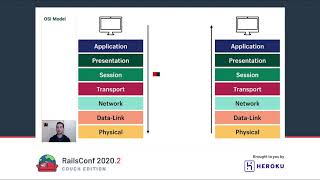 36mPeeling Away the Layers of the Network Stack
 41mThe Secrets Behind Domain Names
 27m"Server Farm to Table"
 20mEverything about DNS you never dared to ask!
 18mThe parts of DNS nobody explained to you