Terraforming in a Serverless World

summary
Practical patterns for provisioning AWS Lambda with Terraform: use source_code_hash so Terraform detects code changes and updates functions; run a null_resource with local-exec that unzips the bundle and fails CI if node_modules or other deps are missing, preventing runtime errors; store zipped artifacts in S3 bundles and version modules in Git to pin runtimes (nodejs10 vs nodejs12) and settings like reserved concurrency; use the archive_file data/resource so CI can create functions on first deploy without prebuilt zips.
AI-written summary · about
chapters (10)
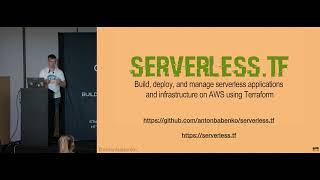
- 0:00Introduction
- 1:37The Need for Abstraction
- 3:56Serverless Advantages
- 6:33DevOps and Serverless
- 8:17Terraform Basics
- 10:35Handling Code Updates
- 13:29Validating Dependencies
- 16:16Versioning and Modules
- 18:37CI/CD Workflows
- 20:38Best Practices and Wrap-up
related talks
 40mTerraform for Serverless. Best Practices. Lessons Learned.
 29mAWS Serverless Deployment with Terraform Enterprise
 22mTerraform for Serverless: Best Practices, Lessons Learned
 43mBuilding an AWS Serverless Application with Terraform
 26mDoing Serverless On AWS With Terraform For Real
 38mUnlocking AWS Serverless with Terraform
 09mWorking with Serverless Functions and CI/CD
 48mCodifying Infrastructure with Terraform for the Future