Leveraging Infrastructure as Code to Create Zero Trust Access to Your Apps and Infrastructure

summary
Argues that replacing VPN/network trust with a software‑defined perimeter and per‑operation policy reduces attack surface by cloaking resources so they aren’t discoverable, and that managing entitlements as code (stored in a repo, linted and applied via CI) makes zero‑trust scalable and repeatable. Implements prototypes using Terraform modules, AWS ALB + Cognito for web proxies and Session Manager/IAM for SSH/database sessions. Claims this approach cuts months of manual work, handles duplicate/overlapping cloud environments, and centralizes auditing for compliance.
AI-written summary · about
chapters (8)
- 0:00Introduction and background
- 1:51What is Zero Trust?
- 4:20Traditional vs Zero Trust access
- 11:26Why Zero Trust for cloud environments
- 16:49Zero Trust access scenarios
- 21:26Zero Trust and Infrastructure as Code
- 23:53Implementation approaches and tools
- 26:20Q&A and closing remarks
related talks
 25mBuilding a DevOps Supply Chain on Zero Trust Principles
 01h 02mIntroduction to Zero Trust Security
 45mZero Trust: Getting to Step One..and What to Do When You Get There
 40mZero Trust, Zero Pain: A Practical Implementation with Intrinsic Security
 31mEmbracing Zero Trust When You Aren't the World's Largest Internet Company
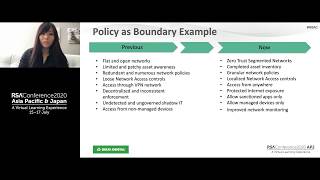 27mA Simplified and Practical Approach to Pursuing a Zero Trust Architecture
 40mClarifying Zero Trust: The Model, the Philosophy, the Ethos
 49mZero Trust Security