Future VR Input & UX Solutions

summary
Claims that 2016 brings five major VR platforms (Google Sony Oculus Samsung Valve) and a spectrum of inputs from gaze and buttons to gamepads and hand tracking with controller-button hybrids. Demonstrations include a built prototype game (fit to fire) that uses hand tracking, shows presence is paramount, and exposes problems: nausea from mismatched vestibular cues, depth/UI double-vision, and targeting issues. Fixes tested: low acceleration, teleport/limited FOV, hiding hands when holding objects (job simulator hand disappears). Advice: prototype fast, nail UX before art.
AI-written summary · about
chapters (5)
- 0:00Start
- 16:09Alternate Approaches
- 28:29Computers look for single conditions Users explore what's possible
- 30:06Design for the hardware
- 31:07UI can reinforce the behavior
related talks
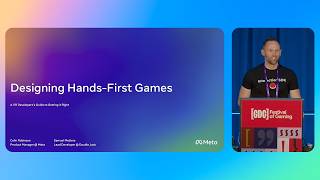 56mDesigning Hands-First Games: A VR Developer's Guide to Getting It Right
 43mDesigning for Hands, Gestures, and VR
 34mWhat's the state of VR gaming in 2016 and beyond
 50mVR Best Practices
 09mRetargeted Self-Haptics for Increased Immersion in VR without Hand Instrumentation
 30mLeveraging Decades of Research in 3D UI Makes or Breaks XR
 47mDesigning Reality: How Immersive Technologies Are Shaping the Future of Human Experience
 16mGetting hands on with VR