Tour d’horizon de la gestion de la concurrence dans différents langages
summary
Compares concrete concurrency models: Java uses synchronized, executors, ForkJoin and CompletableFuture and promises Loom’s virtual threads (claimed ~1,000× lighter) with structured concurrency and scoped values; JavaScript runs a single-thread event loop with callbacks, promises and async/await; Go spawns millions of goroutines and coordinates them with channels and a work‑stealing scheduler; Rust provides zero‑cost async/await compiled to Futures and relies on runtimes like Tokio, async‑std or Bastion to execute tasks. Tools, costs and debugging tradeoffs are named.
AI-written summary · about
chapters (8)
- 0:00Start
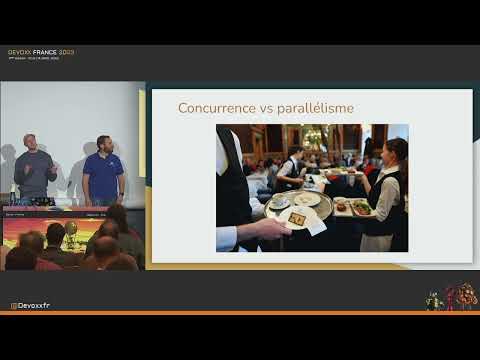
- 2:22Concurrence vs parallélisme
- 9:56Processus, Thread & Green thread
- 22:14JavaScript/TypeScript
- 28:50Golang
- 38:16Rust
- 44:28Conclusion
- 45:54Bonus
related talks
 36mHow Do People Handle Concurrency?
 50mFlavors of Concurrency in Java
 39mLet's talk concurrency
 34mIntroduction and pitfalls of Java's new concurrency model
 56mFlavors of Concurrency in Java
 01h 16mConcurrency Approaches: Past, Present, and Future
 44mConcurrency in Scala and on the JVM
 40mEverything Everywhere All at Once