Asynchronous Remote Work

summary
A company switched to 100% remote and implemented a public-first written workflow using Slack with no private channels and strict channel templates, daily Slackbot check-ins, weekly HPFO highlight posts, and public “spreads” to record production work. Decision-making uses GitHub discussions with deadlines (the opener closes the discussion), canonical docs live in Notion, and automated guardrails are enforced via pre-commit hooks, linters, and Slackbots; after two years they saw better autonomy, faster onboarding and improved wellbeing, though full adoption required 6–12 months and cultural alignment.
AI-written summary · about
chapters (33)
- 0:00Introduction
- 0:23Introduction and presentation
- 2:31Alan, what is it?
- 3:18Company culture
- 4:26What is asynchronous remote work?
- 5:30Everything is public
- 6:20Slack
- 7:32Traits and threads
- 7:55Message format
- 8:22Morning check-in
- 8:46Pressure indicator
- 9:51Progressive HPF
- 10:50Spread for oneself
- 11:41Team Retro
- 13:00The meeting
- 13:35The cost of a meeting
- 13:50How we arrived at this method
- 14:05How does it work when I need to make a decision?
- 15:12Template to open the discussion
- 15:34Example of a closed discussion
- 18:38The story of Alan
- 19:18How do you become autonomous?
- 19:53How to prevent people from making bad choices?
- 20:10Development-oriented examples
- 20:56Unit tests
- 21:48Developer experience
- 22:23Automation
- 22:34Slackbots
- 23:19Private message
- 23:57Assistants
- 24:54Public and written communication
- 25:24Efficiency at scale
- 27:16Conclusion
related talks
 55mWorking Distributed - How Does It Even Work?
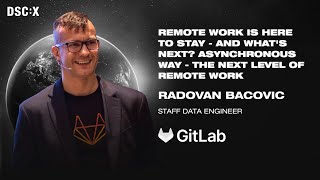 37mAsynchronous Work: The Next Phase of Remote Work
 13mManaging Remote Teams
 55mEffective Communication in a Remote First World
 29mRemote(ly) Better Than Before
 43mOut of Sight, Out of Mind: Survival tricks and tools for remote developers
 57mLessons from {distributed,remote,virtual} communities and companies
 48mThe Remote Revolution