From Farm to Cloud: Using DevOps to Optimise Agriculture Operations
summary
Syngenta runs Cropwise on AWS since 2017, collecting decades of satellite and field data and training ML models that detect crop diseases and deliver real‑time field monitoring. Infrastructure is managed with Terraform and config tools like Ansible, applications run on Kubernetes with GitHub pipelines and Argo, and cost control uses Kubecost and Infracost plus tagging and CloudWatch. Advice includes preferring open standards (Postgres, Apache projects), starting small with automation, and baking FinOps and observability into pipelines.
AI-written summary · about
chapters (13)
- 0:00Introduction and speaker background
- 1:04Why agriculture needs DevOps
- 2:55Cloud technology in agriculture
- 8:42Syngenta’s early cloud adoption
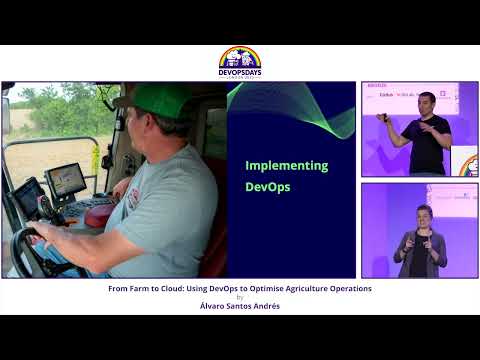
- 10:13Implementing DevOps in projects
- 13:55Spotify model for DevOps teams
- 15:27DevOps lessons from agriculture
- 19:31Open source and licensing risks
- 21:22FinOps mindset for cost control
- 24:55Automation tools and practices
- 26:02Tips for automation adoption
- 28:31Developer-centric DevOps approach
- 29:19Observability and closing remarks
related talks
 33mLearning to Scale Agile-DevOps for Agricultural R&D
 07mAI Infrastructure Transforming Modern Agriculture
 30mCustomer centricity in manufacturing with operational improvements
 47mReady, set, innovate: Building for the future
 13mEngineer your company’s future with AI: Use open source tools on AWS
 01h 02mTransforming IT pros to DevOps gurus: Ssecure your new tech stacks
 15mJourney to Hybrid Multi-Cloud
 26mCase Study of Success