Things I Wish I Knew When I Became a Manager

summary
Covers the first 90 days up to six months: expect constant approvals in broken HR systems, uncomfortable money conversations about bonuses and raises, and changing priorities like adapting work for AI. Emphasizes one-on-one is the most important tool—use regular one-on-ones, competencies and data to set clear expectations, catch performance issues early, and build promotion plans. Shares a real mistake: mishandled lateral transfer suggestion that breached trust, repaired by focused one-on-ones and a recovery plan that later results in the engineer leading work.
AI-written summary · about
chapters (17)
- 0:00Introduction
- 1:06First 90 days to 6 months
- 3:54From technical to strategic work
- 5:18Team work and company strategy
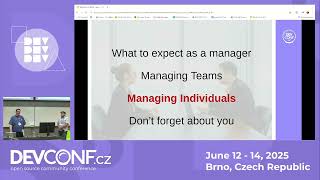
- 6:41Balancing team and individual goals
- 8:26Leveraging team leaders
- 9:09One-on-one conversations
- 10:57Career path planning
- 13:07Mistakes in career management
- 15:34Addressing poor performance
- 17:45Turning around underperformance
- 18:26Prioritizing your career
- 19:51Building peer network
- 21:15Q&A
- 24:29Trust through consistency
- 26:36Management for early-career
- 28:23Closing remarks
related talks
 35mThings I Wish I Knew When I Became a Manager
 31mThings I Wish I Knew When I Became a Manager
 25mThe making of a manager's manager
 12mMaking the move to manager: Common pitfalls for new engineering leaders
 11mThings I got wrong when searching for my first engineering manager job
 12mTech lead to manager: A blueprint for successful transition
 38mThe New Manager's Toolkit
 06mHow NOT to suck as a New Manager